

Index

Minimalism according to Sunna: an alternative to the age of consumerism
Minimalism according to Sunna: an alternative to the age of consumerism

In today’s world, economic progress is increasingly measured by the amount consumed rather than the quality of living.

Overproduction, advertising, the cult of “success” – all these push us towards endless acquisition.


According to the World Bank, 2.01 billion tons of waste are generated annually in the world and by the middle of the 21st century this figure could exceed 3.4 billion. At the same time, internal emptiness, anxiety and the constant desire for “even more” are only increasing.

In response to this crisis of awareness, more and more people are turning to minimalism as a philosophy of life. However, this idea is not new at all. Long before the West began talking about mindful consumption, the Islamic tradition already had a clear and profound concept – zuhd.


Zuhd: the path of moderation, not renunciation

Zuhd is often translated as “asceticism”, but in reality it is not about escaping from the world but about renunciation of its excessive influence. It is liberation from attachment to material things, the ability to be content with what is necessary.

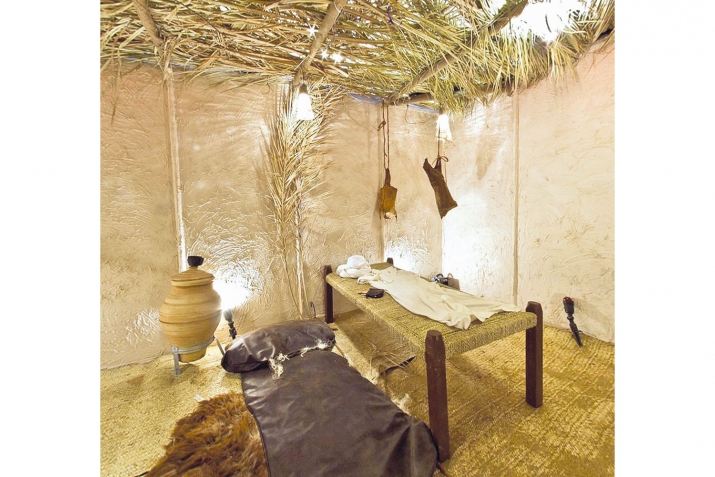
The living embodiment of zuhd was the Prophet Muhammad ﷺ. He did not preach complete renunciation of the world but showed an example of conscious consumption: he lived modestly, shared his property and wore simple clothes. He did not accumulate wealth and respected every natural resource, be it water, bread or fabric. Calling for a conscious attitude to the transience of life and to those benefits that we possess only for a time, the Messenger of God ﷺ said, “Be in this world as if you were a stranger or a traveler.” (Narrated by Al-Bukhari).


To be continued…



Aidar Galimov 

As-Salam writer

2026-05-01 (Dhul-Qaida 1447) №5.


The Hidden Power of Good Character: What is Righteousness in Islam?

Good moral character is one of the most revered qualities in Islam. Allah, the Almighty, has commanded people to ennoble their character, along with performing the five daily prayers, fasting during Ramadan, paying zakat, performing pilgrimage and fulfilling other religious...


Twelve Forgotten Achievements of Muslim Scholars

Today, it is common to associate scientific and technological advances with European civilisation. However, few people know that without the scientific advances of the Muslim world in the Middle Ages, modern European civilisation would never have reached the heights of science it has. We will...


Slave, Equal, Guardian: Who is She?

Why is it the man who is the breadwinner?   As for the responsibility of providing for the family (wife and children) this responsibility falls precisely on the man, whether husband or father, because he is the primary breadwinner. This rule will remain in effect until the Day of Judgment and it...


The Aghlabid Dynasty

In 184 AH (Muslim calendar), Caliph Harun al-Rashid sent a new governor to the province of Ifriqiya (Africa). This vast province, which regularly disrupted the supply of goods and food to the capital of the Arab Caliphate, troubled the Caliph and required constant, heightened attention. A...


Water Wheels of Syria

I have a 1978 Syrian Republic banknote in my collection, worth one Syrian pound, depicting two enormous water wheels. They are located near the city of Hama in central Syria and to this day, anyone can see the operation of this amazing ancient structure – enormous twin wooden wheels located on the...