

The Aghlabid Dynasty
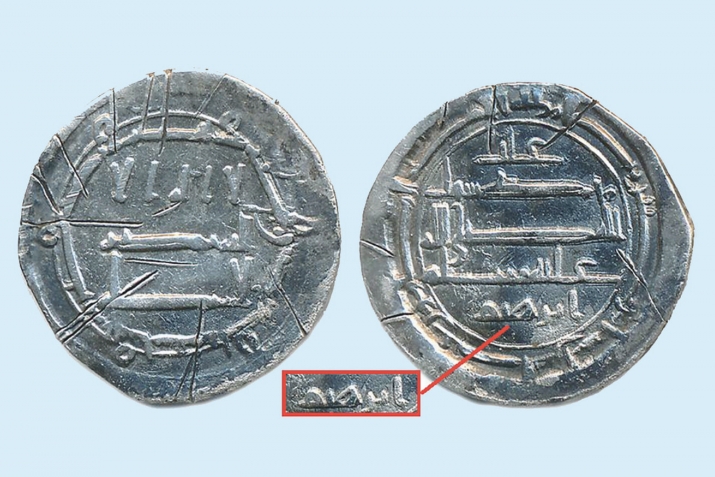
In 184 AH (Muslim calendar), Caliph Harun al-Rashid sent a new governor to the province of Ifriqiya (Africa).
This vast province, which regularly disrupted the supply of goods and food to the capital of the Arab Caliphate, troubled the Caliph and required constant, heightened attention. A succession of rapidly changing governors failed to ease the tension in North Africa and ensure stability in the region.
This time, the Caliph’s choice fell on Ibrahim ibn al-Aghlabi, the son of an Arab military commander from the province of Khorasan. Ibrahim was an experienced military leader and administrator, his loyalty to the Caliph confirmed by years of impeccable service. He set out on his campaign to distant Africa with broad powers granted by the Caliph, leading a detachment of proven and reliable warriors. What more could an independent and strong-willed leader, accurately assessing his own strength and the authority entrusted to him, need? He had a task to accomplish: take control of the province of Ifriqiya, or rather, reconquer North Africa. Assessing his opponents, Ibrahim knew he would face not a powerful army under a unified command but disparate groups of local chieftains and tribes, constantly competing with each other.
Ibrahim ibn al-Aghlabi and his small but well-organized force managed to quickly traverse the territory of such modern-day countries as Libya, Tunisia and Algeria. He defeated some enemies by force of arms, forged alliances with others and made them friends and still others joined his forces. After establishing order in the province of Ifriqiya, he carried out administrative reforms, established ties with the centre of the caliphate, and organised the collection and regular delivery of taxes to Madinat al-Salam (Baghdad). A portion of the tax was reserved for the maintenance of the army and civil administration. Funds were needed for the construction of a new capital, which moved from Kairouan to al-Abbasiya.
Ibrahim became the founder of a new Muslim dynasty, known as the Aghlabids, which ruled North Africa from 184 to 296 AH. The Aghlabids considered themselves subjects of the Baghdad caliphs and, despite their complete independence, annually sent the required tax to the capital of the caliphate. In the region’s mosques, the names of the ruling caliphs were always mentioned during the Friday sermon (khutba).
Gold dinars and silver dirhams bearing the name of Ibrahim and his ruling descendants were regularly minted at established weight standards at North African mints.
Coins minted by the eleven rulers of the dynasty circulated freely in the Arab Caliphate and, thanks to ceaseless merchant caravans, reached Eastern Europe and Scandinavia.
Warriors of the Arab army, who participated in military campaigns and the capture of the islands of Sicily, Malta and southern Italy, also contributed to the spread of Arabic coinage in Southern Europe.
The Aghlabids built a powerful navy and, together with the fleet of the Andalusian Umayyads, dominated the waters of the Mediterranean.
Today’s international maritime lexicon contains words of Arabic origin: admiral – amir al-bahr – lord of the sea; arsenal – dar al-sinaa – work yard (shipyard); barge – barija – a vessel carrying a fortress; and many others.
Aghlabid dirhams are rare. Texts on the coin proclaim:
Galab (he conquered) Muha-mmad is the Messenger of God ﷺ
Mimma amara bihi al-amir
al-Ma’mun Abdullah bin
Amir al-mu’minin Ibrahim
The circular inscription on the reverse side is the so-called “second symbol” of the ayah of the Koran (meaning of the commentary): “He (Almighty Allah) is the One Who sent His Messenger (Muhammad ﷺ) with guidance and the true religion, to exalt it above all other religions, even if (it) is disliked by the pagans.” (Sura At-Tawbah, ayah 33).
The centre of the obverse of this coin bears a three-line inscription:
There is no god but Allah ﷻ
He is One, there is no one equal to Him.
The circular inscription reads:
In the name of Allah ﷻ this dirham was minted in Abbasiya in 184.