

Evidence of the miracle of the splitting of the moon in the archives of the British Library
Evidence of the miracle of the splitting of the moon in the archives of the British Library
If you proceed from the Arabian Peninsula straight across the Arabian Sea to the city of Mumbai, in the south of India, you cover about 1,500 kilometres.
It is not surprising then, that at the dawn of Islam, very enterprising Muslim merchants quickly covered this distance and landed in the southern region of India known as Malabar.
It was in this region, located between the Western Ghats mountains and the Arabian Sea, that many small principalities existed during the period of the birth and spread of Islam.
The ruler of one of them one night witnessed an unusual phenomenon. Right before his eyes, the Moon split into two parts and reunited again. He was confused, and the court astronomers did not know what to say.
The riddle was solved by the Muslim merchants we mentioned, who arrived in the region and asked for an audience with the ruler, wanting to gain permission to visit Ceylon. It was they who told about the Prophet Muhammad ﷺ and the miracle of the splitting of the Moon.
How this happened is known from a number of hadiths. Thus, Abu Nuaim reported from the words of Ibn Abbas: “Once the leaders of the unbelievers, led by Walid bin Mughira and Abu Jahl, came to the Messenger of Allah ﷺ and told him, “If you are telling the truth, then split the Moon into two parts so that one part of it is above Abu Qubais, and the other is above Kuaykian” (the names of two mountains in Mecca). The Prophet ﷺ addressed them with the words, “If I do this, will you believe?” They answered in the affirmative. Then the Messenger of Allah ﷺ called to his Lord, and the Moon split in the sky: part of it was visible on one mountain, and the second part on another. And the Favorite of Allah ﷺ said, “You bear witness!”
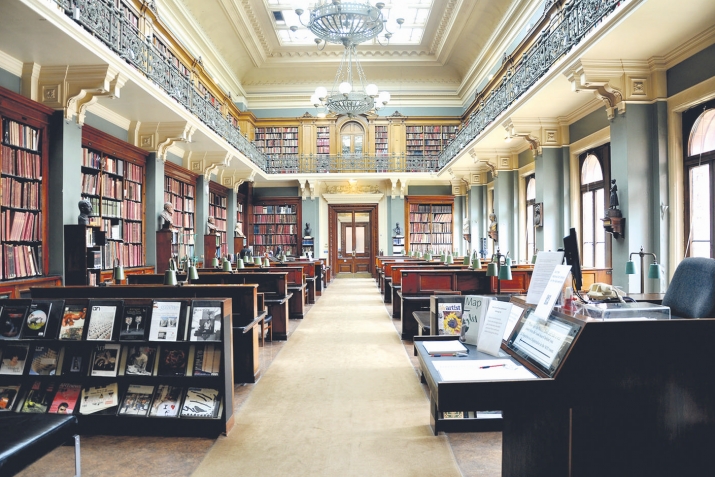
This incident is also recounted in a manuscript that remains to this day in the catalogue of the India Office of the British Library. The document, which ended up in the main library of the capital of Great Britain, is titled “An Incredible Story about the First Settlement of Muslims in Malabar under King Shakruti of Cranganore (Kodungallur), a Contemporary of Muhammad ﷺ, Who was Converted to Islam by the Miracle of the Splitting of the Moon.”
Intrigued, the Indian ruler, together with Muslim merchants, travelled to Arabia and accepted Islam in the presence of the Messenger of Allah ﷺ. It is believed that it is this particular historical meeting which was mentioned in the hadith of Imam al-Bukhari and Abu Said al-Khudri: “The king from India presented the Messenger of Allah ﷺ with a bottle of marinade that contained ginger. The Prophet ﷺ distributed it to his companions. I also got a piece to eat.”
In accordance with the command of the Prophet ﷺ, a group of his companions led by Malik bin Dinar set out with a cheraman (the title of an Indian ruler who embraced Islam) to spread Islam in what is now the state of Kerala (India). However, during the journey the king fell ill. Before his death, he wrote a letter to his sons in which he asked them to accept Malik bin Dinar and provide him with all the necessary help. The king later died and was buried, according to some sources, in Zafar (now Salalah) in Oman.