

A mosque. A prison. And a mosque again.
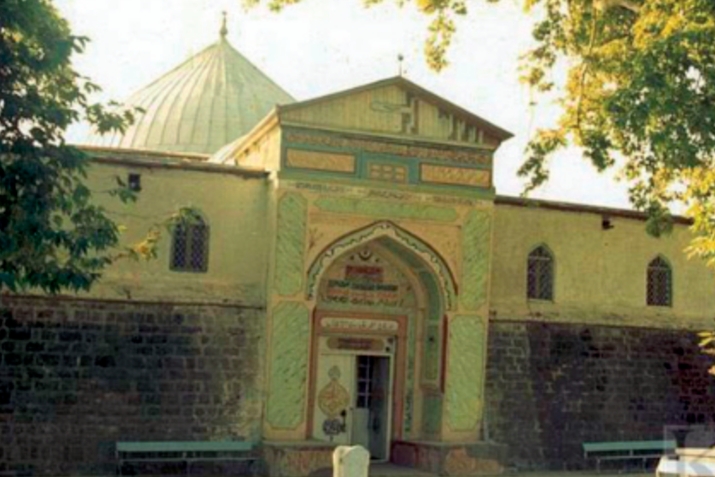
The oldest Juma mosque in North Caucasus (Derbent)
Derbent is one of the oldest towns that has saved its original look till nowadays. One can hardly find another town that has survived so many invasions and destructions, and has been source of contention and a scene of bloody battles so many times.
The first Islamic activists and descendants of the Prophet Muhammad (peace and blessings be upon him) started their charitable mission here.
After the Arabs conquered Iran in 642, they reached the walls of ancient Derbent under the command of Maslama in the first quarter of the 8th century. They considered that the town could become a centre of Islamic religion in the northeast Caucasus.
From that time on Derbent became the spiritual home and Islam became the most wide-spread religion of the region.
In 733 seven mosques were built here. Each town quarter (magal) had one. And a special cathedral mosque to be used for Friday Salahs, called al-Masjid al-Jamii, was raised.
There were 15 mosques in Derbent in 1796. The Juma mosque is truly the cradle of Russian Islam. It is one of the first significant mosques to arise out of the Islamic caliphate.
The Juma mosque is situated in the centre of Derbent’s old quarter. It is a part of the architectural ensemble of the ancient town. The group of buildings consists of the main mosque, a madrasa and some houses where religious leaders lived.
The building of the mosque is dated to the 115th year of Hijra (or 733-734). The Juma mosque was the biggest building in the town. Its size was quite impressive for those times. Its length from west to east was 68 metres and 28 metres from south to north. The height of the cupola is 17 metres. And the courtyard was about 2475 square metres.
The mosque interior has three naves. The width of central nave is 6.3 m, while the side naves are 4 m wide. The naves are separated by square columns 97 to 97 cm wide, with profiled capitals. The columns are connected by lancet arches.
The Juma mosque was rebuilt many times during its centuries-long history. An inscription at the entrance says that the building was repaired after an earthquake in 770th year of Hijra by Tajjudin, the builder from Baku.
Thirteen hundred years later we can still enjoy the original structure of the Juma mosque. Eras have passed, natural disasters have struck, generations have changed, and the town has changed gradually, but the Juma mosque remained the same like an impregnable fortress surviving all ordeals.
It is a pity that the Juma mosque has survived difficult times. It was shut down in the 1930s, when an anti-religious campaign was carried on throughout the whole country. But unlike other religious objects this mosque had a particularly cynical destiny. In 1938-1943 it was under the jurisdiction of the USSR’s secret police department (NKVD) and served as a municipal prison with attributes common to such places.
In 1943 (in the midst of the Great Patriotic war) there was a decree issued in Moscow passing the mosque back to religious leaders who could from that time on return it to a place of worship again.
Gorgeous plane trees are Juma mosque’s special features. Four grand trees tower above the high cupola of the building. Thanks to them, the mosque can be seen from any part of town.
FROM ISLAM MAGAZINE