

The Black Stone of the Kaaba: Between History and Modernity
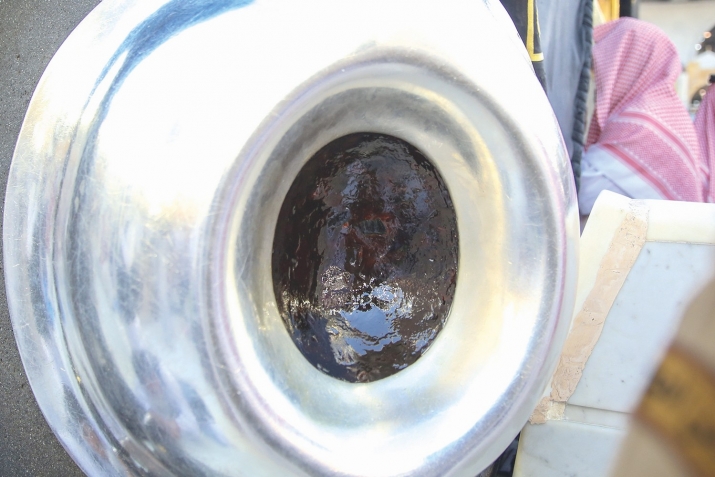
The Black Stone (al-Hajar al-Aswad) is one of the most revered relics in Islam, located in the eastern corner of the Kaaba in Mecca.
Its history is replete with mysteries, dramatic events and religious veneration. Despite destruction and theft, the relic has survived and is still part of the sacred pilgrimage site. However, few people know that individual fragments of the Black Stone are not only in the Kaaba, but also in various parts of the world, including Istanbul and even in the possession of individual people.
Fragments of the Black Stone in Istanbul
During the Ottoman era, at the time of the reconstruction of the Kaaba, the Black Stone was damaged and several fragments broke off. One of the craftsmen involved in the reconstruction secretly took the fragments, but his actions were soon revealed. However, the famous Ottoman architect Mimar Sinan succeeded in these fragments remaining in Istanbul, calling them “honoured guests”.
Today, in the capital of Turkey, you can see parts of the Black Stone in several sacred locations: in Sokullu Mehmet Pasha Mosque - four fragments of the relic were built into the architectural elements of the mosque: above the entrance, at the top of the mihrab, at the entrance to the minbar and at the top of the minbar; and in Suleymaniye Mosque - another fragment is placed above the entrance to the mosque of the great ruler of the Ottoman Empire. These relics attract many Muslims who revere them as parts of the sacred Black Stone.
Theft of the Black Stone by the Qarmatians
One of the most dramatic episodes in the history of the Black Stone was its theft in 930. The Qarmatian sect captured Mecca, robbed the Kaaba and took the shrine to Bahrain. The Black Stone was in the possession of the Qarmatians for 22 years.
Only in 952, under pressure from the Muslim world, did the Qarmatians agreed to return the relic, which was in a broken state. Since then, the fragments of the stone have been fixed in a silver frame, which prevents them from falling apart. Historians claim that not all parts of the relic have been found.
The Black Stone today
Today, the main part of the Black Stone is located in the Kaaba at a height of 1.5 metres and one of the desired rituals of the Hajj is kissing it. However, the relic itself consists of several fragments inserted into a monolith. This is done in order to preserve its integrity after all the historical upheavals.