

Leo Africanus: the traveler and geographer
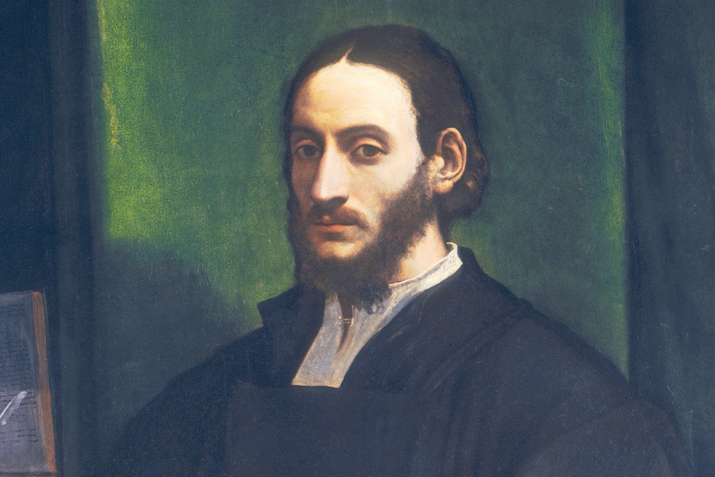
Al-Hasan ibn Muhammad al-Wazzan, known to history as Leo Africanus, was born in the Spanish city of Granada to a Muslim family.
In 1492, after the city was conquered by the Castilians, his family was forced to leave their home and migrate to Morocco, where he spent much of his life. In Fez, he studied at the renowned University of Al-Karaouine, which emerged as one of the most important centres of learning of its time.
From an early age, al-Wazzan showed an interest in diverse cultures and geography. At the age of about twenty, he participated in a diplomatic mission with his uncle, visiting Timbuktu, an important commercial and cultural centre of West Africa in the early 16th century. His travels were not limited to this; in subsequent expeditions, he explored many regions of Morocco, including difficult-to-access mountainous areas, as well as states such as Bornu and Nubia. He also wrote that he had visited Constantinople, Tunisia, Egypt, Persia, and the Arabian Peninsula, where he undertook the Hajj to Mecca.
Capture and the New Route
In 1518, al-Hasan ibn Muhammad's fate changed dramatically when he was captured by the Sicilian corsair Pietro Bovadilla near the island of Djerba. He was brought first to Naples and then to Rome, where he was presented to Pope Leo X de Medici, the successor of Lorenzo the Magnificent. During this time, al-Wazzan was given a new position: under the pope’s patronage, he began teaching Arabic in Bologna. The pope gave him the name Leo and thus he entered European history as Leo Africanus.
During his time in Italy, al-Wazzan wrote his major work, “Description of Africa and its Sights”. Having completed this in 1526, he also authored several other texts, including the “Arabic-Hebrew-Latin Dictionary” and “On Men Considered Famous by the Arabs”, many of which have been lost unfortunately.
The transition from Pope Leo X to Pope Hadrian VI was a difficult period for al-Wazzan: he lost the support of his high-ranking patron, which is believed to have led to his return to the African continent in 1528, where he was once again able to practice Muslim rites in peace. He passed away in Tunisia around 1550.
Contributions to geography
Al-Wazzan’s major work, “Description of Africa”, was first published in 1550 by the Venetian cosmographer Giovanni Battista Ramusio. This work, which long existed in manuscript form, became the primary source of information on the countries of North Africa and sub-Saharan Africa. In it, the author draws on a wide range of sources, both Arabic and classical, and shares his own observations from his travels.
Leo Africanus describes in detail both the daily life and customs of the peoples he encountered, as well as the unique natural beauty of the regions he explored. His work is considered a significant contribution to Arab and European geography and has served as a valuable resource for subsequent generations of researchers and historians, opening the door to the mysterious and diverse world of Africa. The works of al-Hasan ibn Muhammad al-Wazzan are a unique monument to both Arab and European geography.