

The tallest building of the 9th century
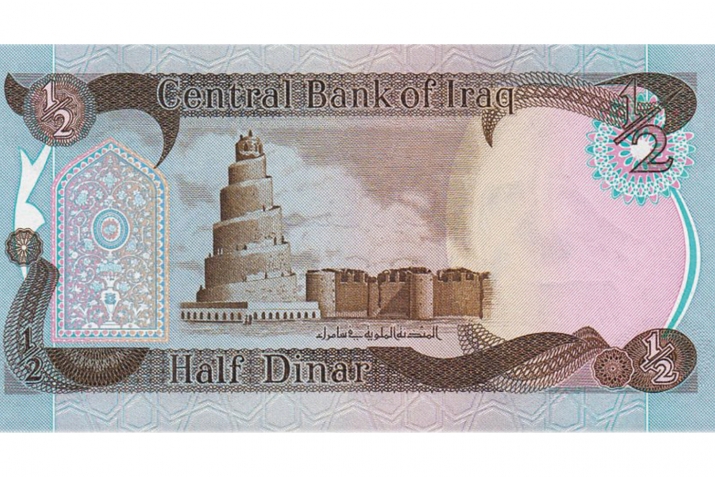
Skyscrapers are nothing new these days. The first skyscrapers were built in New York City at the end of the 19th century.
In the 20th century, they became the hallmarks of many cities around the world. Their construction has always been directly linked to the new and latest technological advances of humanity and today resembles a highly intellectual technical competition: who can build the highest?
In Kuala Lumpur, a 452-meter-tall building was erected, while in Dubai the Burj Khalifa is 828 meters tall. In the 9th century, the tallest building in the world was the minaret of the Grand Mosque in Samarra, the temporary capital of the Arab Caliphate. This minaret was depicted on the 1993 Iraqi half-dinar banknote. The Great Mosque, which has not survived to this day, was the largest and most majestic structure of its time. Its surviving minaret gives an idea of the mosque’s former grandeur. Rising against its desert backdrop, the minaret leaves a lasting impression on those who see it for the first time.
In the 9th century, the minaret was unrivaled. Its height, then and today, stands 52 m, with a base width of 33 m. It is crowned with a cylindrical turret containing a chamber with a radius of 6 m, decorated with eight arches. Those wishing to ascend to the top of the minaret can still do so today via the original inclined ramp that spirals around the structure.
Construction of the Great Mosque and minaret began in 836 under the Caliph al-Mu’tasim and was completed in 852 under the Abbasid Caliph al-Mutawakkil. The minaret has its own name, “Malviya”, which translates as “spiral shell” and describes the architectural style in which it was built.
The construction of the mosque and minaret utilised the building technologies and materials available to the architects and builders of the time. The minaret is constructed of sandstone and remains in working order to this day. Of course, over the past millennium, the minaret has endured much. It has endured the return of the capital to Baghdad, which reduced Samarra to provincial status, and the endless military clashes that took place beneath its walls resulting in the Mongols destroying the great mosque itself. It has also endured periodic repairs aimed at preserving the minaret. In 2007, the city of Samarra, whose city walls are also visible on the banknote and the minaret have been inscribed on the UNESCO World Heritage List. However, the state lacks funds for full-scale restoration and this priceless gem of Muslim architecture continues to deteriorate.
The last damage to the minaret occurred on 1 April 2005, when an explosion damaged its top. After capturing Iraq, the American occupiers established a military camp on the ruins of the ancient city of Samarra and set up an observation post on the minaret. This observation post was attacked by Iraqi insurgents.
It is fortunate that this historic structure has survived to this day. It is fortunate that its image is featured on banknotes and has been accessible to every Iraqi citizen for so many years. I hope this minaret does not collapse but will continue to serve as a monument to the greatness of the Almighty Creator.