

A city of mosques lost in the jungle
A city of mosques lost in the jungle
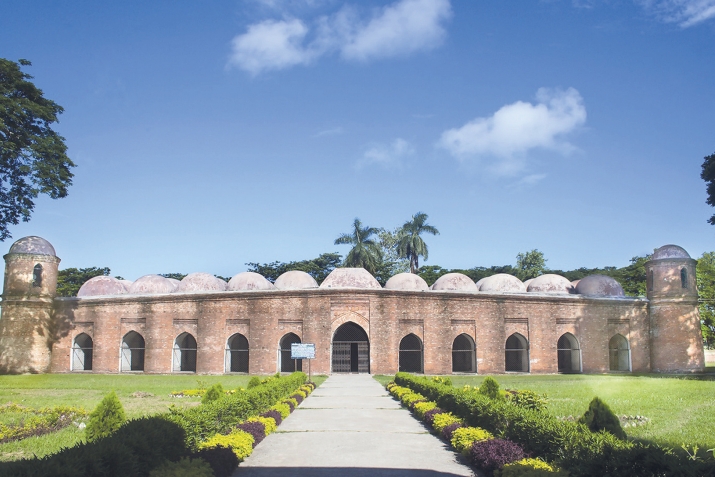
In the southwest of the modern state of Bangladesh, at the confluence of the Ganges and Brahmaputra rivers, there is an abandoned ancient city that once remained hidden by the jungle.
The 360 mosques, mausoleums, bridges, roads, water tanks and other public buildings that have survived to this day testify to its being a prosperous metropolis in ancient times. It was called Khalifatabad.
The magnificent city, spread over an area of 50 square kilometres, was founded in the 15th century by the commander Ulugh Khan Jahan.
The quality of the local infrastructure: water supply and drainage, cisterns and reservoirs, roads and bridges – all testifiy to the high technical literacy and perfect mastery of the planning methods of the medieval masters who participated in the construction of this architectural miracle of Muslim civilization.
According to UNESCO experts, it is here that one can observe a unique architectural style known as khan-e-jahan, which is the only known example in the history of architecture.
One of the most impressive Muslim monuments in the entire Indian subcontinent is the mosque known in Bengali as Shait Gumbad, which means “sixty-domed mosque.” Nevertheless, it actually has 77 domes and 4 minarets. The interior is divided into many passages and compartments by thin columns, which culminate in numerous arches supporting the roof. The mosque is listed as a UNESCO World Heritage Site.
Khalifatabad remains an abandoned city of the past, a silent testimony to the civilization that once flourished here. However, it is accessible to tourists and others who wish to enjoy its wonderful architectural structures.
Reference
Bangladesh is located in the northeast of south Asia. Its territory is 147.57 thousand square km. It borders on the west, north and east with India, on the south-east with Myanmar, and on the south by the Bay of Bengal of the Indian Ocean.
The climate is humid tropical. The air temperature throughout the year varies from +10°C (in January) to +40°C (in April).
The population is about 169.8 million people (according to updated 2022 census data).
National composition: 99% - Bengalis.
The state religion is Sunni Islam (professed by 90% of residents).
The official language is Bengali. English is widely used.
The capital is Dhaka (about 10.3 million inhabitants, with a total urban agglomeration of about 21 million).