

The Predecessor of Mendeleev: Jabir ibn Hayyan
Chemistry as a science studies the structure of substances, their characteristics and the reactions that occur under various conditions.
For centuries, scientists have sought to expand their knowledge in this area and Muslim researchers have made significant contributions to the development of chemical sciences. However, despite their discoveries, many of these efforts have not received due recognition or coverage in scientific works.
In this article, we will discuss the outstanding Muslim scientist who, a thousand years before Dmitri Mendeleev, sought to classify the chemical elements and debunk several common myths about his contributions to chemistry.
Chemistry and Alchemy: Two Different Approaches
The term “alchemy” is often used to describe the early forms of chemical science. Some believe that modern chemistry dates back only to the 17th and 18th centuries, when the science began to develop based on rigorous methods and practices. However, this assertion ignores the many remarkable contributions of his predecessors.
Research shows that Muslim scholars such as Jabir ibn Hayyan significantly enriched chemical science and laid the foundation for its further development. Eric John Holmyard, a renowned chemist and historian, emphasises in his works that Islamic chemistry is the foundation of modern science.
Abu Musa Jabir ibn Hayyan
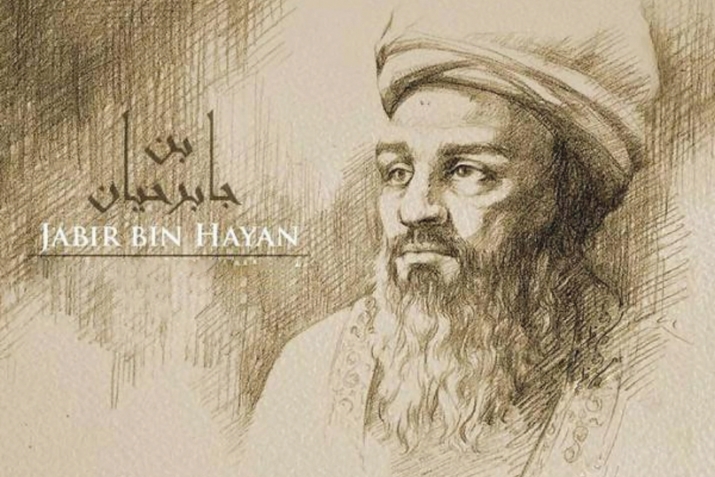
Jabir ibn Hayyan, born around 721 in the village of Tus (now in Iran), grew up in a family where knowledge of chemistry was passed down from generation to generation. Jabir’s father was a pharmacist and this likely influenced his future career. After his father’s tragic death in political battles, Jabir found refuge in Kufa (a city in Iraq), at the court of Caliph Harun al-Rashid, where he continued his chemical experiments.
Experimental Methodology
Jabir ibn Hayyan became one of the greatest scientists of his time and is considered the “father of chemistry”. He emphasised the importance of an experimental approach, which distinguished his work from the speculative methods of ancient Greek philosophers. Jabir emphasised that practical experience and experimentation were key to achieving mastery in chemistry.
Jabir’s Scientific Achievements
His pursuit of precision led to the development of accurate scales, and his experiments with mixing, heating and cooling substances enabled the creation of new reactions, such as reduction and distillation. He designed alembics, which facilitated the process of obtaining purified substances, marking a major advance in chemical production.
Furthermore, Jabir described many chemical bonds and developed a theory of chemical elements, anticipating ideas later developed by scientists such as John Dalton.
One of Ibn Hayyan’s significant contributions to science is the discovery of strong acids, including sulfuric, hydrochloric and nitric. These substances became the basis for many industrial processes and still play an important role in the chemical industry.
Predecessor of the Periodic Table
It is noteworthy that Jabir ibn Hayyan also attempted to create a classification of chemical elements that could serve as the basis for the periodic table, made famous by Dmitri Mendeleev. His approach to grouping elements by various characteristics, including metals and non-metals, demonstrated that ideas for systematizing chemistry had long existed and were developing beyond the boundaries of known science.
P.S.
Thus, Jabir ibn Hayyan not only made significant discoveries in chemistry but also laid the foundation for the further development of science. His work, despite the lack of interest in the past, was an important milestone on the path to modern scientific achievements. Debunking the myths about his contributions helps us better understand the origins of chemistry and its development as a science.