

The genius of mechanics in the Islamic Golden Age
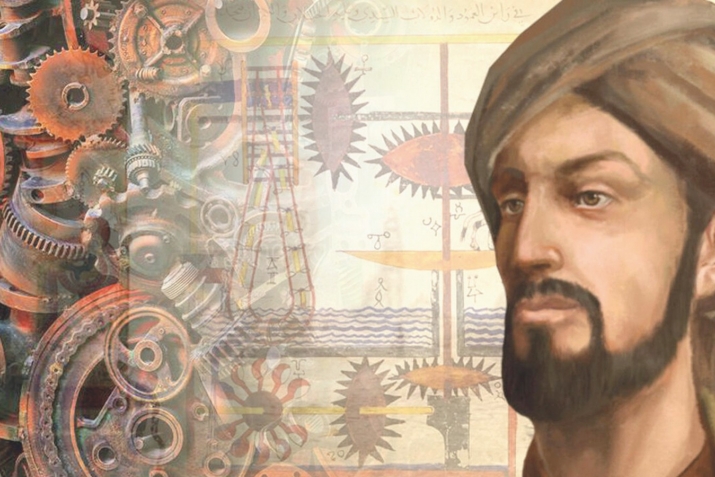
The Islamic Golden Age was an era of outstanding discoveries and advanced ideas, giving the world many names of great scientists.
One of the most prominent representatives of this period is Abu al-Iz ibn Ismail ibn al-Razzaz al-Jazari (1136–1206), an inventor and engineer whose contribution to the development of mechanics is difficult to overestimate.
Born into the family of the chief engineer of the beylik of Artukogullary, Ismail absorbed the spirit of scientific research and engineering creativity from an early age. He received his education at the Jamia madrasah, where he studied the exact sciences in parallel with religious disciplines. Influenced by his father, he developed a passion for creating various mechanisms, being more interested in practical aspects than in theory.
In his famous work, The Book of Knowledge of Ingenious Mechanical Devices, al-Jazari described about a hundred different mechanisms, complete with detailed illustrations and explanations of their operating principles. Among his inventions, you can find not only watches and combination locks but also such amazing devices as robot musicians. One of his most famous creations was four automatic musicians who, while in a boat, played drums while floating down a river.
Al-Jazari not only learned from the work of predecessors such as the brothers Musa and Sagani but also came up with unique solutions that paved the way for future inventions. His innovative ideas included laminating wood, creating scale models from paper, lapping moving parts using corundum, metal doors, and creating a hybrid compass with a universal sundial suitable for all latitudes.
In 2010, at an exhibition in the UK called “1001 Inventions: Discovering Muslim Heritage in Our World”, a six-metre-tall replica of al-Jazari’s water clock was exhibited, which became the real star of the event, demonstrating the greatness of the inventor’s engineering thinking.
Ismail al-Jazari lived in the 12th century and is rightfully considered the “father of robotics” or the “Islamic Leonardo da Vinci”. Interestingly, Leonardo da Vinci himself studied al-Jazari’s works and used his ideas in his own inventions. Al-Jazari’s genius left a bright mark on history and continues to inspire many engineers and scientists of our time.