

Al-Dinawari: The Muslim Polymath
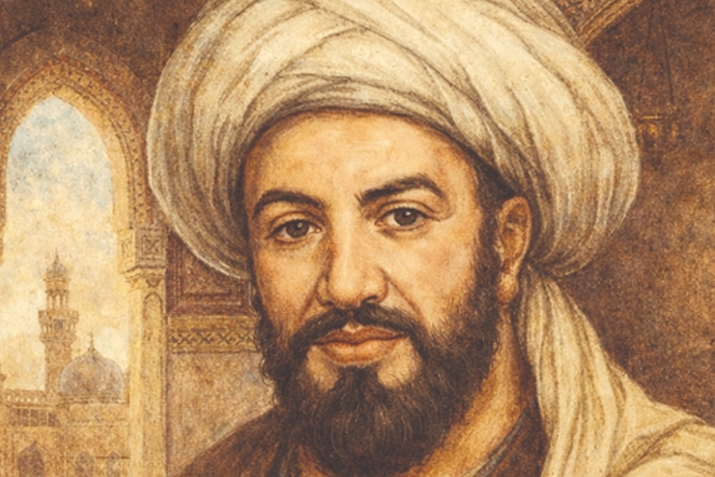
Abu Hanifa Ahmad ibn Dawud Dinawari, known as al-Dinawari, was born in 828 in Dinawar (near Kirmashan) and died in 895.
He was a Kurdish scholar of the Islamic Golden Age who made significant contributions to astronomy, botany, geography, agriculture, metallurgy, mathe-matics and history. As al-Dhahabi points out in his biography, al-Dinawari was one of the most versatile scholars of his time.
He studied various disciplines, including philology, geometry and astronomy. His most famous work is the “Book of Plants”, for which he is considered the founder of Arabic botany. Ibn al-Nadim described al-Dinawari as an educated man who studied with scholars in Basra and Kufa and contributed much to scholarship, possessing extensive knowledge in such fields as grammar, trigonometry, and the natural sciences.
“The Book of Plants” consists of six volumes, of which only the third and fifth have survived, while the sixth has been partially reconstructed based on citations from subsequent works. This work describes 637 plants, their growth and flowering stages. The first part of the book touches on astronomical and meteorological phenomena associated with plants and discusses the various types of soil suitable for these plants.
Al-Dinawari emphasized his Kurdish national identity by using Kurdish terms for local flora in his work. Al-Nadim also listed his other works, including those on mathematics, astronomy, and the humanities, such as “The Ancestors of the Kurds” and “The Great Book of the History of Science”, “How the Populace Mistaken When They Speak”, and “The Improvement of Language”.
Furthermore, al-Dinawari built his own astronomical observatories, which were used to accurately observe stars and planets, remaining relevant for more than two centuries after his death, until the Mongol invasion, which destroyed everything in its path.
Professor B.A. Levin noted that al-Dinawari’s highly accurate observations could have been due to his mathematical abilities. In his historical work “General History”, al-Dinawari described the development of humanity, with an emphasis on the Middle East, from antiquity to the 9th century CE.