

Index

Woman’s dress drawing attention
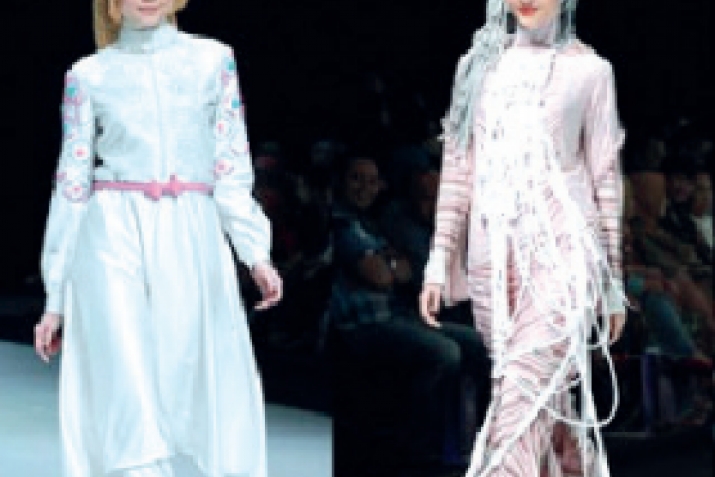
Woman’s dress drawing attention

Is it permissible for a woman to leave the house, dressed up and putting on jewelry?

A woman is forbidden to go out in clothes that attract attention and looks from strangers.

These include clothing that does not completely cover or reveals a woman’s awrat, as well as clothing made of thin fabric that reveals the body’s outline and highlights its forms.

It is forbidden to wear jewelry on top of clothes thus displaying them draws attention to oneself.

Argumentation: It is transmitted that Aisha, may Allah be pleased with her, said, “My sister Asma, may Allah be pleased with her, went to the Messenger of Allah (peace and blessings be upon him) dressed in a thin robe. Allah’s Messenger (peace and blessings be upon him) turned his back on her and said,

‘O Asma, for a girl, upon reaching the age of the first menstrual cycle (menarche), it is forbidden to flaunt anything other than this’, and he pointed to the face and hands.” [1]

“It is a great sin for a woman to wear revealing thin transparent clothes that do not hide her skin colour and show off her attractiveness.”

Imam Al Zahabi says: Deeds for which a woman which deserve the curse of the Almighty include displaying jewelry of gold and precious stones from under her clothes, perfuming herself with incense such as musk when leaving the house, and also leaving the house dressed up with shiny items of gold and silver, silk pants and clothes with wide long sleeves.

All these acts are meant for adornment and dressing up for show, and a person who shows off falls under the wrath of Almighty Allah in this and the next world. [2]

References:

  1. Sunanu Abi Dawud, vol. 4, p. 231, No. 4104
  2. Ibn Hajar al Haythami, Az Zawajir, v. 1, p. 224

2026-07-01 (Muharram 1448) №7.


Calling for Truth: The Prophet’s Messages to Rulers

The Prophet’s ﷺ Message to the Ruler of Damascus The Messenger of God ﷺ wrote the following letter to the Governor of Damascus, al-Harith: “In the name of Allah, the Most Compassionate, the Most Merciful! From Muhammad ﷺ, the Messenger of God, to al-Harith bin Abu Shimr. Peace be upon...


The Art of Wearing a Headscarf in the Arab World

The headscarf that Muslim women use to cover their hair and neck reflects their spiritual values, their desire for modesty and their personal connection to religion. Over the centuries, unique traditions have developed in various parts of the Islamic world, each with its own characteristics and...


Emotional Burnout from Oneself

Do you ever get the feeling that you are tired not from work, but from constant internal tension, self-control, and the need to meet your own high standards? How to recognize this quiet fatigue of the soul?   This is not the kind of fatigue you can measure in overtime hours or the number of...


The Explorer of Natural Laws: Al-Jahiz

In every nation, there always appear a small number of individuals who are inexorably drawn to the understanding of nature and its laws. Abu Uthman Amr ibn Bakr al-Basri, better known as al-Jahiz, noted: “Nations that do not have such individuals are doomed to...


Dialogue or Argument in the Family

Dialogue and argument are similar in meaning. Both involve an exchange of opinions on a specific topic.   However, dialogue is conducted politely, with careful listening and an exchange of knowledge, allowing each person to learn something new. An unworthy argument, however, is more like a...