

Index

Iftar

Iftar

Iftar

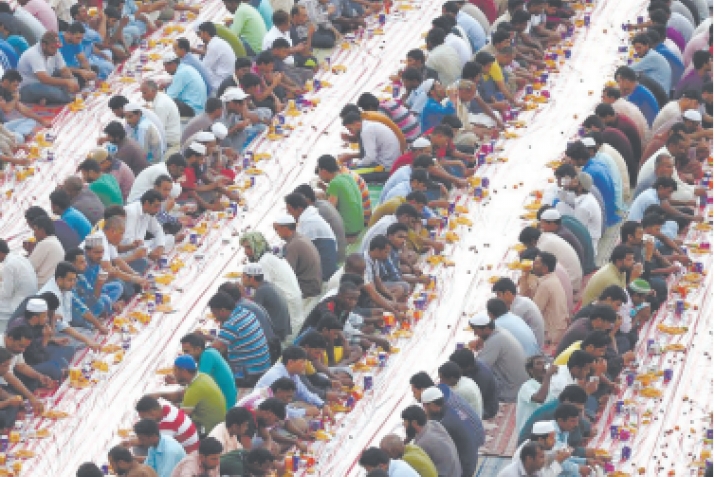
Iftar is observed during the holy month of Ramadan. It is one of the oldest rituals followed by Muslims all over the world. Ramadan occurs in the ninth month of the Islamic lunar calendar during which the whole Islamic community observe a complete fast during the daytime hours.

Muslims take a meal before dawn and only end their fast in the evening with a special meal. This special evening meal is known as Iftar and is taken after the sun sets. The timings of Iftar vary according to when the sun goes down in any given area.

Every Muslim should observe certain principles when he or she is going to break the fast:

Iftar should be immediately taken after the sun sets.

The Iftar breaking of the fast should be commenced with dates, if available. If they are not available, it should start with a sip of milk or water.

In the case of cloudy skies, Iftar should be delayed until the time of sunset is confirmed.

It is considered Makruh (disliked) if Iftar is delayed after sunset or taken before the sunset, as its time is considered to be very auspicious.

Iftar generally starts with Dua (prayer). It is a common belief that Dua made during Iftar are readily accepted. The regular Dua or prayer offered in every Muslim household during Iftar is: “Allahumma Inni laka sumtu wa bika amantu [wa alayka tawakkaltu] wa ‘ala rizqika aftartu” which in English means “O Allah! I fasted for You and I believe in You [and I put my trust in You] and I break my fast with Your sustenance”.

MUHAMMAD YUSUF

2026-07-01 (Muharram 1448) №7.


The Digital Whirlwind: How Not to Lose Oneself in the World of Social Media

It is hard to imagine the modern world without the internet, instant messaging apps and social media. A young person who does not use the internet or is not registered on social media is the exception rather than the rule. Such people, unfortunately, may even be considered out of touch.   I...


The Art of Wearing a Headscarf in the Arab World

The headscarf that Muslim women use to cover their hair and neck reflects their spiritual values, their desire for modesty and their personal connection to religion. Over the centuries, unique traditions have developed in various parts of the Islamic world, each with its own characteristics and...


The Reason Why Do We Cry at Beautiful Scenes in Movies

Have you ever experienced the situation when you are watching a movie, and suddenly something so beautiful happens on the screen that a lump forms in your throat and treacherous tears roll down your cheeks?   The hero finally achieves his goal, meets a loved one after a long separation, or...


Let the Soul Grow

Science surprisingly confirms the wisdom revealed 1,500 years ago in the hadith of the Prophet Muhammad ﷺ. I was given another reason to reflect on this when reading an excerpt from a lecture by Carl Gustav Jung, the founder of analytical psychology.   The psychologist asks a question that...


Emotional Burnout from Oneself

Do you ever get the feeling that you are tired not from work, but from constant internal tension, self-control, and the need to meet your own high standards? How to recognize this quiet fatigue of the soul?   This is not the kind of fatigue you can measure in overtime hours or the number of...