

How Muslims Protected Christian Shrines
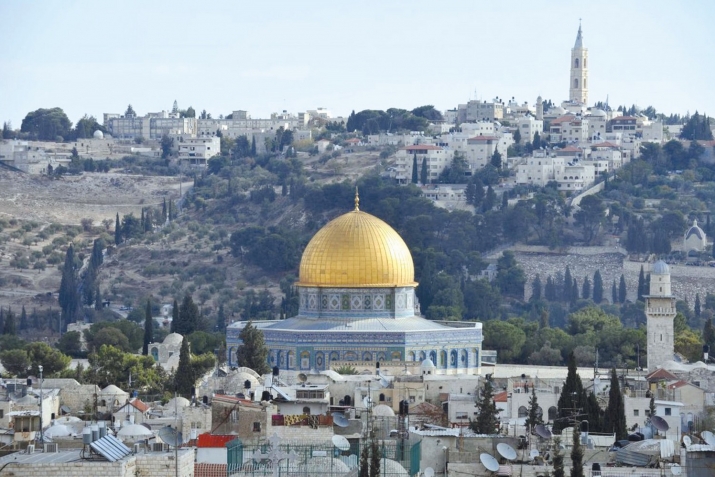
In an era when interreligious conflicts often become a tool for political manipulation, history preserves amazing examples of solidarity and mutual respect. A special place among them is occupied by the tradition of Muslim protection of Christian churches - a phenomenon rooted in history.
A lesson in mutual assistance between two faiths
Back in 615, the Prophet Muhammad ﷺ sent his followers from Mecca to Ethiopia when his heart could no longer withstand the persecution that the polytheists of Mecca inflicted on his companions. At that time, Ethiopia was ruled by the Christian ruler Najashi. The Prophet ﷺ, sending his companions on their journey, said: “In Ethiopia you will find a ruler under whom no one is oppressed...”
Jerusalem, 7th century: a lesson in mercy
Later, when the caliph Umar ibn al-Khattab entered Jerusalem, Patriarch Sophronius (Safranius) showed him an old church in the ancient part of the city. At that moment, the time for prayer came, and the patriarch invited him to pray in the temple. But Umar refused, fearing that Muslims in the future would want to turn the church where he prayed into a mosque. Instead, he performed namaz in another place, where later the Umar Mosque was built by Muslims. This gesture became a symbol of respect for the foreign faith and the protection of the Christian shrine.
Moreover, the Caliph Umar ibn al-Khattab concluded an agreement with Patriarch Sophronius: “I guarantee the safety of your lives, property and churches. Not a single church will be destroyed and not a single Christian will suffer for his faith.”
Muslims of Astrakhan: protection of an Orthodox shrine during the years of persecution
In his speeches, Patriarch Kirill of Moscow and All Rus has repeatedly emphasized the importance of interreligious dialogue, citing cases where Muslims stood up to defend Christian shrines. One such episode is associated with Astrakhan, a city where Orthodox and Muslims have lived side by side for centuries.
In the 1930s, at the height of the USSR’s anti-religious campaign, the Astrakhan authorities planned to demolish the Assumption Cathedral, a pearl of Russian Baroque built in the early 18th century. They decided to “repurpose” the temple, which was a spiritual symbol of the region, as a warehouse or even destroy it. The local Orthodox community, suppressed by repression, could not openly protest.
Having learned of the authorities’ plans, Astrakhan Muslims, inspired by the Islamic principles of protecting non-believers, categorically protested against the destruction of the Orthodox church. The leaders of the local Muslim community addressed the Soviet authorities with a statement in which they emphasized that the cathedral was not only a Christian shrine but also part of the common cultural heritage of Astrakhan. Muslims collected signatures, wrote collective letters and some even kept vigil at the walls of the temple to prevent attempts at vandalism.
To be continued…