

Sincerity of Faith
Sincerity of Faith
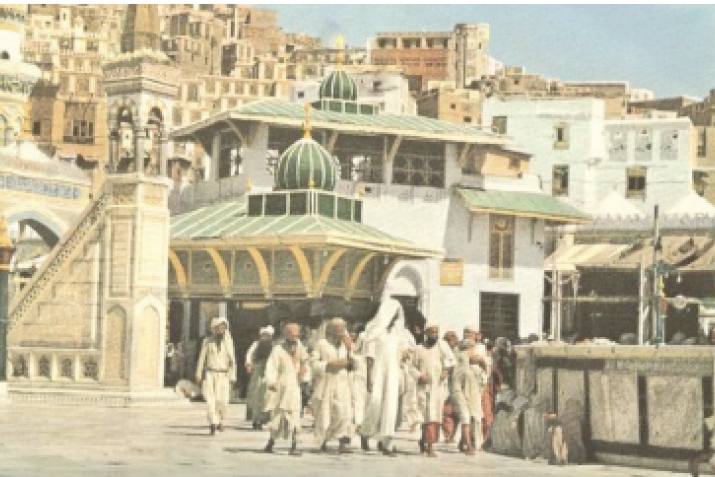
The second righteous caliph Umar ibn al Khattab (may Allah be pleased with him) had several children and the most similar to his father was Abdullah. Among the children of Abdullah was one who resembled him in manner, appearance and deeds Salim. He lived in Medina. At the time Medina was a very wealthy city. People from everywhere came there for trade and other business. But Salim was not interested in worldly things, rather he was Godfearing. He always strived to be in the worship of the Almighty and helped those in need as much as he could.
Once Salim went on Hajj. It was the year when the caliph Suleiman ibn Abdulmalik also performed the pilgrimage.
While circumambulating the Kaaba, Suleiman noticed Salim, the son of Abdullah, sitting nearby. After circumambulation (tawaf) Suleiman came up to him. Salim was reading the Koran. Seeing the caliph walking, the people around made way for him.
But Salim was so absorbed in reading the Koran that he did not even notice the ruler. The caliph sat down next to him, so that his knees barely touched those of Salim.
Forgetting about everything, spending his time in remembrance of the Almighty and reading the Koran, Salim did not pay attention to the ruler and did not even look at him. The caliph wished to talk with him but waited until he finished reading.
When Salim had finished reading, Suleiman greeted him. Salim answered his greeting appropriately. Then the caliph moved close to him and in a low voice said, “Tell me what you need, I will fulfill everything you wish.”
However, Salim said nothing. Thinking that he did not hear him, the ruler moved closer to Salim and again repeated his offer to help him in some way.
Then, swearing by the Almighty, Salim said that he was embarrassed to ask anyone else, as he was in the house of Allah. The caliph was ashamed by the answer, and saying nothing more, he sat down next to him.
Having performed prayer, Salim was about to leave. As soon as he left the mosque, people surrounded him and asked about some of the sayings of the Prophet Muhammad (peace and blessings be upon him), others demanded a fatwa on various issues and still others asked him to pray for them.
The caliph was also among the crowd. Noticing him, the people parted and let the ruler go ahead. He went up to Salim and, bowing down, said again quietly, “We are no longer in the mosque now, tell what you wish for.”
Salim asked the ruler, “What do you want me to ask for the benefits of this world or the Hereafter?”
Suleiman replied, “Of course, of this world.”
Salim then said, “I do not ask for worldly things from the One who owns them, so why should I ask them from someone who does not own them?”
Salim’s answer ashamed the caliph again and he left the place saying, “Is there anyone better than you in indifference to worldly things, in serving Allah the Almighty and in fear of God, O of the family of Khattab? Verily, the Almighty is enough for you. May Allah bless the relatives of Allah’s Beloved!”
May the Almighty help everyone to praise Him for the blessings He gives and the ability to follow the path of Sharia! Amin!
MUHAMMADARIF KURBANOV
THEOLOGIAN