

Feeding and Raising a Child
Ali bin Abu Talib said, “There is no milk more blessed and beneficial for feeding a child than his mother’s milk.”
Hilba infusion or decoction has a beneficial effect on milk production and secretion, but frequent consumption of hilba can alter the milk’s taste and cause stomach upset in the child.
It is not recommended to consume more than 100 ml of hilba infusion or decoction per day. It is also worth noting that the mother’s mental and psychological state affects the quality of the milk. Feeding while angry, sad, or stressed is harmful to the child.
The book “Kunuzu Sihha” states: “During the first weeks, the baby should be fed frequently: every time he asks, as in the first weeks, he absorbs little milk. However, after a few weeks, the baby should be accustomed to a feeding schedule.
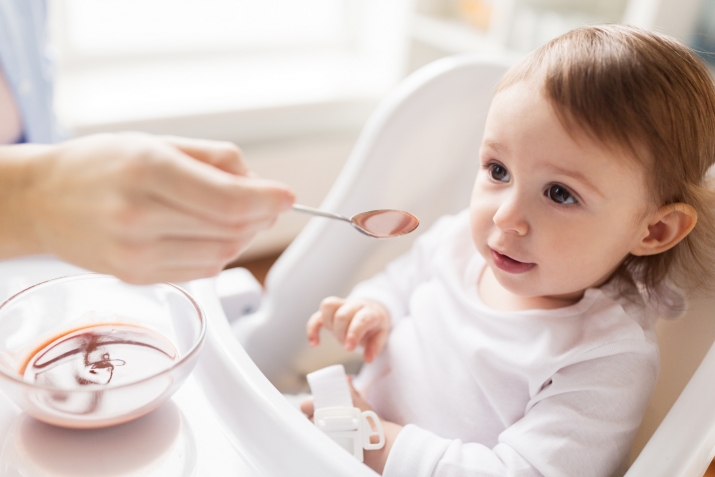
It is advisable to feed him four times during the day and twice at night, an hour or two after or before the mother’s meals. In the fifth or sixth month, you can accustom the baby to light foods, such as rice porridge with milk or water. By the age of two, accustom him to adult food and gradually wean him off breastfeeding.
The same book also states: “The mother should keep her child clean by washing and bathing him and by keeping his head and body clean. He should not be forced to stand on his feet until he is ten months old, as his bones are still weak.
If a child is afraid of something, they should gradually accustom him to it (what they are afraid of) and show him that there is no need to be afraid. At the same time, he should be taught to be wary of certain things such as fire and predatory animals.
Parents should remember that their child follows their example in everything, so be an example to him in all things. You cannot agree with everything (bad behavior) your child does and you cannot give him everything he wants, as many parents mistakenly do.
From the age of seven, children should be taught physical exercises such as wrestling and swimming. They should also be taught the basics of religion, reading and memorizing the Koran, writing and reading and encouraged to study other sciences without overtiring them.
It is desirable for children to get at least eight hours of sleep and eat four meals a day. From the age of seven, they should be taught ethics and good behavior.
Saifulla-kadi Bashlarov writes: “Children should be taught a routine for eating, sleeping, bathing and other activities so that they grow up to be regular and punctual (attentive). Starting from the third month after birth, they can be accustomed to eating. After eating, do not put the child to bed immediately. They should be left to play for at least half an hour. Before putting a child to bed, one should ventilate his room.”
Ali bin Abu Talib said: “At two years of age, a child is weaned from breastfeeding, at seven years of age, his baby teeth fall out, at fourteen, he reaches adulthood, until 23, he grows and at 40, he becomes a fully formed.”
Asmu’i said: “They say that a child up to seven years of age is your comfort, by nine, your servant and helper, and at fourteen, he becomes either your friend or your enemy. If you treated him well, he will become your comrade and friend; if not, he will become your enemy.”