

What wisdom does Hajj contain?
What wisdom does Hajj contain?
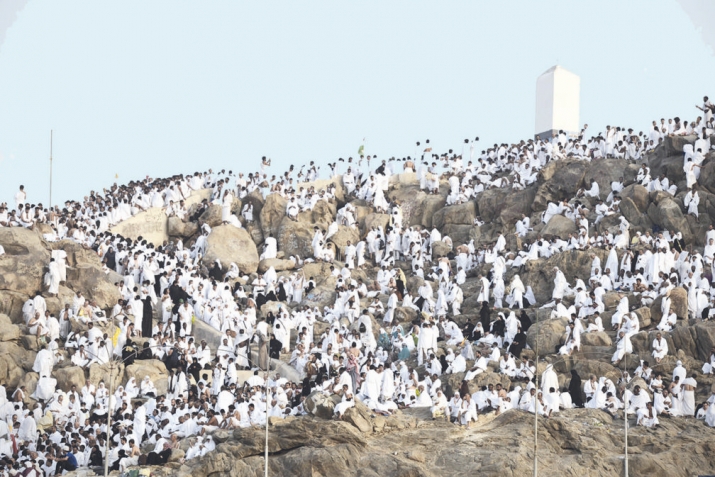
Hajj is a universal worship, for it is performed with both property and body.
Hajj differs from other pillars of Islam in that it is performed only at a certain time and in a certain place on earth, while such pillars of Islam as prayer, fasting, zakat can be performed in any corner of the globe.
God the Almighty has established rules and laws for His servants in such a way that the person who performs them benefits both in this life and in the Hereafter. The Holy Koran, explaining the Hajj, mentions the benefits and wisdom contained in this pillar of Islam.
Some Pilgrimage Wisdoms
- Unification of Muslims. Islam places special importance on warm and friendly relations between Muslims. The precepts of Islam promote the cohesion and unity of Muslims. For example, residents of one neighborhood meet five times a day at a nearby mosque to perform the obligatory congregational prayer. Residents of each locality are ordered to gather in the mosque for Friday prayers once a week. And all Muslims on the planet have the opportunity to meet once a year for the Hajj. Hajj is the largest regular conference of Muslims in the world.
- Revitalising true Muslim brotherhood. All Muslims, regardless of race and nationality, perform the same rites and rituals and asking the Lord - the One for all, turn in the same direction, i.e. towards the Kaaba.
- The attraction of all Muslims, no matter how far they are, to the centre of the Islamic world - the Blessed Mecca, from which the light of monotheism spread throughout the world.
- Showing equality among Muslims. When observing the rituals of Hajj, privileges are excluded; master and servant, minister and worker are all on the same level. Truly, this is the place that reminds us of the equality of all people before God. Also, the Hajj is a reminder of the Day of Judgment, when everyone will stand before the Lord without clothes, in fear of interrogation, where neither the nobility of the family, nor property, nor position in society will help.
- Hajj is a reminder to Muslims of their pious ancestors - prophets and messengers, so that believers may be deeply inspired and faith strengthened in their hearts. Each place where the Hajj ceremony is performed is associated with some historical event. First of all, let us remember the first man on earth, Adam (peace be upon him), who for the first time, barefoot, covered only with a cape, circumambulated the Kaaba seven times. In front of the Kaaba, the pilgrim presents the image of the messengers of God Ibrahim (peace be upon him) and Ismail (peace be upon him), who rebuilt the Kaaba after the flood.
Believers also represent the Prophet Muhammad (peace and blessings be upon him), who helped during the restoration of the Kaaba, walked around it and kissed the sacred stone ‘Al-Hajar al-Aswad’. The hills of Safa and Marwa remind the pilgrim of Hajar, who was looking for water for her son and future prophet Ismail. Being in Mina, where they throw stones, he remembers the prophet Ibrahim (peace be upon him), who in this place drove away Satan from himself, throwing stones at him and the prophet Ismail (peace be upon him), whom his father led from there for sacrifice. Standing on Mount ‘Arafa recalls the first meeting of our ancestors Adam (peace be upon him) and Hava on this mountain, and therefore in some sources it is called the mountain of meetings and expectations.
At 'Arafa, the believer presents the image of the Messenger of God (peace and blessings be upon him), who, performing the farewell Hajj, bequeathed to the believers, “O people, your Lord is One, and you are all the offspring of Adam, Adam was created from the earth, and the Arab has no advantage over non-Arab, except in fear of God. And after me, do not be like the infidels who are at enmity with each other...”
- Hajj is the education of a pilgrim, when he, while on the road and facing various difficulties and inconveniences, must show patience (sabr). During the Hajj, a large number of Muslims meet in one place, where it is necessary to show perseverance in overcoming difficulties, modesty, tact and compliance. Hajj also instills generosity in a person when he slaughters a sacrificial animal on the day of Eid al-Adha or when he gives alms to the poor.